


Strong Core, Stronger Back: The Pilates Connection to Pain-Free Movement
Your Core Is More Than Just Abs!
When most people think about strengthening their core, they picture toned abdominal muscles and a flatter stomach. But your core does much more than improve your appearance. It plays an important role in supporting your spine, maintaining good posture, improving balance and helping your body move efficiently.

Whether you spend long hours sitting at a desk, stand throughout the workday, exercise regularly or simply want to move more comfortably, having a strong and stable core can make a significant difference in how your back feels.
The good news? You don't need to spend hours doing crunches or lifting heavy weights to build a stronger core. Pilates offers a low-impact, controlled approach to strengthening the muscles that support your spine while improving flexibility, posture and body awareness.
So, how exactly does core strength help reduce back pain, and where does Pilates fit in?
1. What Exactly Is Your Core?
Your core is a group of muscles surrounding your abdomen, lower back, pelvis and hips. Think of it as your body's natural support system.
Some of the key muscles include:
Transverse abdominis: Deep abdominal muscles that help stabilise your spine and pelvis.
Rectus abdominis: The muscles at the front of your abdomen that assist with trunk movement.
Obliques: Muscles along the sides of your abdomen that help with rotation and side bending.
Multifidus: Small muscles along your spine that help provide spinal stability.
Pelvic floor muscles: Support the pelvic organs and work together with other core muscles.
Diaphragm: Your primary breathing muscle, which also contributes to core pressure and stability.
Together, these muscles help your body maintain control when bending, lifting, walking, sitting, exercising and performing everyday activities.
2. How Does a Strong Core Help Reduce Back Pain?
A weak or poorly coordinated core may make certain movements more challenging, particularly when your body has difficulty controlling movement around the spine and pelvis.
Strengthening your core can help in several ways.
1. Provides better spinal support
Your abdominal and back muscles work together to support your spine. Developing strength and coordination in these muscles can improve your body's ability to control movement and manage everyday physical demands.
2. Improves posture and body awareness
Poor posture, prolonged sitting and repetitive movements can contribute to discomfort. Core-focused exercises help improve awareness of how you position your body, making it easier to maintain comfortable and efficient movement patterns.
3. Improves balance and stability
Your core helps keep your body steady when walking, standing, bending and changing positions. Better trunk control can improve balance and coordination, particularly during physical activities.
4. Makes everyday activities easier
Simple activities such as lifting groceries, getting out of bed, climbing stairs or carrying a child require core engagement. Stronger muscles can help you perform these movements with greater control and confidence.
5. Supports recovery from lower back pain
Research suggests that structured exercise, including Pilates, can help reduce pain and improve function in people experiencing chronic, non-specific lower back pain.
A 2024 systematic review and meta-analysis published in Disability and Rehabilitation, which examined 36 studies, found that Pilates was beneficial for reducing lower back pain compared with no exercise, with similar positive findings when compared with other forms of exercise.
3. Why Pilates Is an Excellent Way to Strengthen Your Core
Pilates is much more than stretching or gentle exercise. It is a movement-based exercise method that focuses on controlled movements, breathing, alignment, flexibility and strength.
One of the main benefits of Pilates is that it encourages you to engage your deep abdominal and spinal muscles while performing controlled movements.
Here is why Pilates can be particularly beneficial for your back:

Controlled movements: Pilates encourages proper movement patterns instead of relying on momentum.
Deep core activation: Exercises target muscles that help stabilise the spine and pelvis.
Improved flexibility: Gentle movements help maintain mobility in the hips, spine and surrounding muscles.
Better breathing techniques: Coordinating breathing with movement helps improve body awareness and control.
Low-impact exercise: Many Pilates exercises can be modified to accommodate different fitness levels and physical abilities.
Scientific evidence also supports its potential benefits. A 2023 systematic review examining eight randomised controlled trials found emerging evidence that Pilates can improve core muscle strength in people with chronic lower back pain.
The important thing to remember is that Pilates is not simply about having stronger abdominal muscles. It is about teaching your body to move with better control, coordination and stability.
4. Five Pilates-Inspired Exercises to Help Strengthen Your Core
You don't need complicated equipment to begin strengthening your core. Here are five exercises commonly incorporated into Pilates and rehabilitation programmes.
1. Pelvic Tilts
Lie on your back with your knees bent and feet flat on the floor. Gently tighten your abdominal muscles and tilt your pelvis to flatten your lower back towards the mat. Hold briefly, then relax. Try: 8–10 controlled repetitions.

2. Glute Bridges
Lie on your back with your knees bent. Engage your abdominal muscles and squeeze your glutes as you slowly lift your hips. Keep your body aligned from shoulders to knees, then lower gently. Try: 8–12 repetitions.

3. Dead Bug
Lie on your back with your arms extended towards the ceiling and knees bent at 90 degrees. Slowly lower your opposite arm and leg while maintaining a controlled trunk position. Return to the starting position and alternate sides. Try: 6–8 repetitions per side.

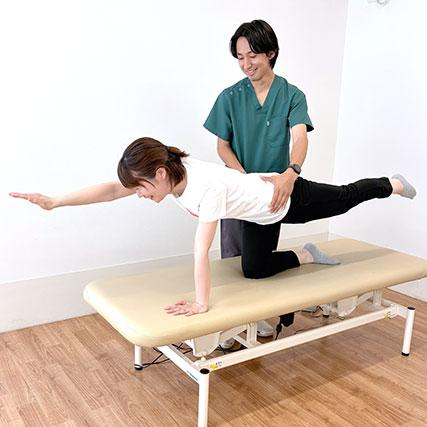
4. Bird Dog
Start on your hands and knees. Extend your right arm and left leg simultaneously while keeping your back steady. Hold briefly, return to the starting position and switch sides.
Try: 6–8 repetitions per side.
5. Modified Plank
Begin on your forearms and knees, keeping your body in a straight line from shoulders to knees. Gently engage your abdominal muscles and hold while breathing normally.
Try: Hold for 10–20 seconds.

Remember: Start slowly, focus on proper technique and avoid pushing through pain. These exercises are general examples, not a personalised treatment programme. A physiotherapist can help determine which movements are appropriate for your needs.
5. How Often Should You Do Pilates to Strengthen Your Core?
Consistency is more important than intensity.
If you're new to Pilates, start with one or two sessions per week and gradually increase as your strength, coordination and confidence improve.
A practical approach may include:
2–3 Pilates sessions weekly: Focus on core strength, stability and controlled movement.
Daily movement: Incorporate walking and gentle physical activity into your routine.
Gradual progression: Increase exercise difficulty as your body becomes stronger.
Proper technique: Prioritise correct alignment and breathing rather than completing as many repetitions as possible.
Research continues to explore the ideal frequency and duration of Pilates for people with lower back pain. Your programme should be adjusted according to your fitness level, symptoms and goals.
The World Health Organization also recommends structured exercise as part of the non-surgical management of chronic primary lower back pain.
6. When Should You Seek Professional Help?
Although strengthening your core can support back health, not all back pain is caused by weak abdominal muscles.
Back pain may be associated with muscle strains, disc problems, joint conditions, nerve irritation, injuries and other underlying issues.
You should consider consulting a physiotherapist if:
Your back pain keeps returning.
You experience discomfort when bending, walking or sitting.
Your pain interferes with sleep or everyday activities.
You experience persistent stiffness or reduced mobility.
You are unsure which exercises are safe for your condition.
Seek urgent medical attention if back pain is accompanied by new bladder or bowel control problems, numbness around the groin or saddle area, or significant or progressive leg weakness.
A physiotherapy assessment can help identify contributing factors and determine an appropriate treatment and exercise plan.
7. Build a Stronger Core with Rehab Oasis Pilates!
At Rehab Oasis Limited, we believe that movement is an important part of maintaining a healthy, active lifestyle.
Our Pilates sessions combine controlled movements, strength, flexibility and body awareness to help you improve your overall fitness and movement quality.
Whether you're looking to strengthen your core, improve your posture, increase flexibility or complement your physiotherapy recovery, Pilates can be a valuable addition to your wellness routine.
Our sessions are led by trained Balanced Body Pilates instructors, with an emphasis on proper technique and controlled movement.
Join us and take the first step towards a stronger, healthier you!
Rehab Oasis Limited
Unit 8, Lee Gore Business Centre, 31 Upper Waterloo Road, Kingston 10 Monday, Wednesday & Friday | 5:30–6:30 p.m.
$3,000 per class
1-876-789-2466


Comments